Genomes
What is a genome?
The National Human Genome Research Institute defines a genome as the complete set of DNA in an organism.
A genome is “all the DNA” — but all the DNA in what?
Eukaryotic cells can contain more than one genome (nuclear + mitochondrial, and chloroplast in plants).
- “Genome” = all DNA in the system being discussed
- “Nuclear genome” = all DNA in the nucleus
- “Mitochondrial genome” = all DNA in mitochondria
- “Chloroplast genome” = all DNA in chloroplast
Eukaryote: DNA is in compartments
In the Eukaryotic animal cell on the left there are membrane-bound organelles including:
- A nucleus holds the nuclear genome, the majority of a eukaryote’s DNA
- Mitochondria an organelle distinct from the nucleus that has its own DNA
- Were this a plant cell it would also contain chloroplast, an organelle that photosynthesizes and has its own DNA
The prokaryotic cell on the right lacks organelles (more on that later).
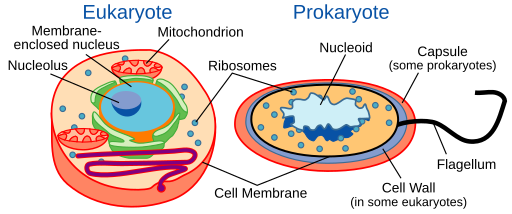 Figure. A eukaryotic cell has a nucleus and organelles a prokaryotic cell does not (more on that below). Image Source: Science Primer (National Center for Biotechnology Information). Vectorized by Mortadelo2005., Public domain, via Wikimedia Commons
Nuclear genome: DNA inside the nucleus
- DNA is stored inside a membrane-bound nucleus
- This DNA is packaged and organized into structures called chromosomes
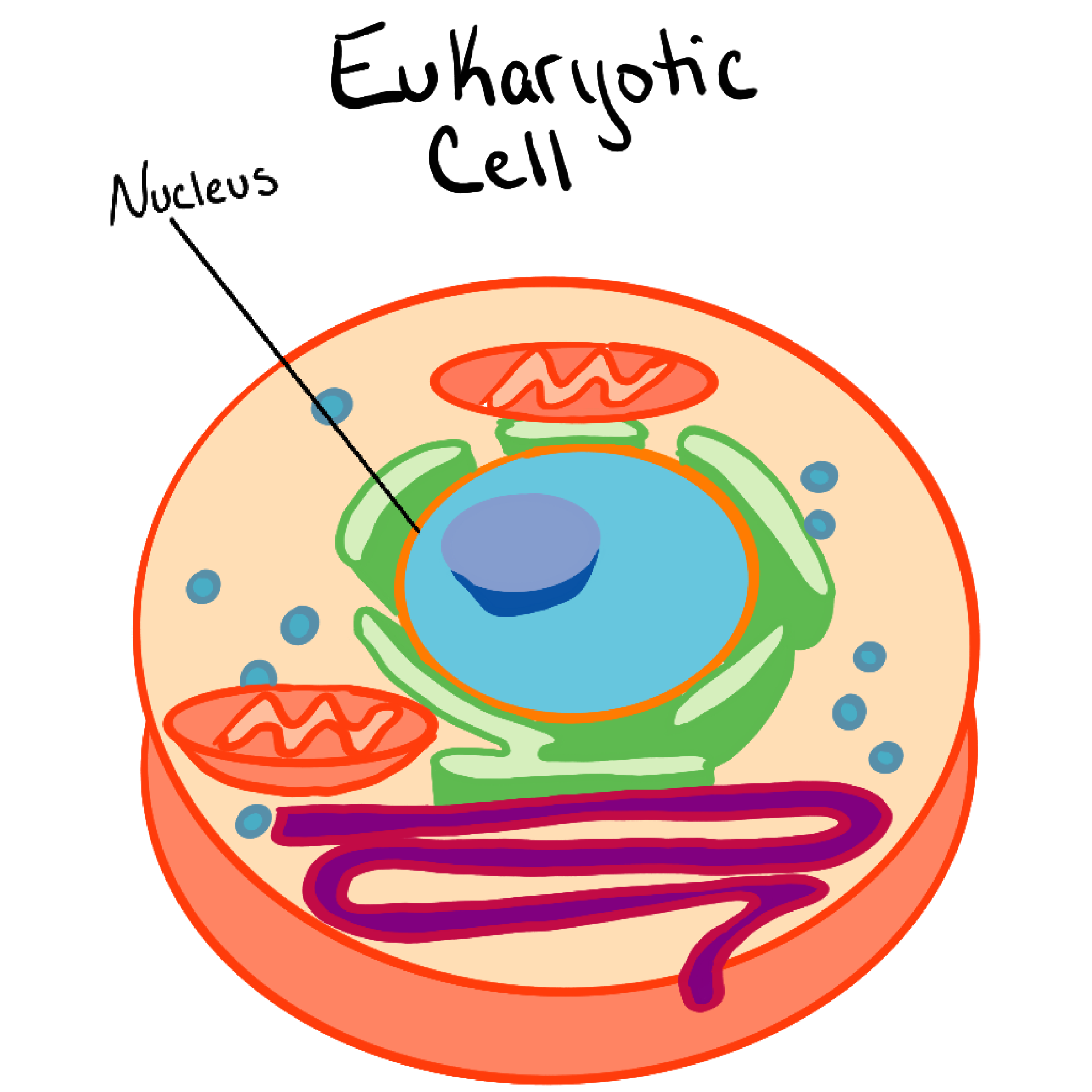 Figure. The nucleus houses most DNA in eukaryotic cells.
Mitochondrial genome: DNA inside mitochondria
- Mitochondria contain many small circular DNA molecules
- The mitochondrial genome is distinct from the nuclear genome
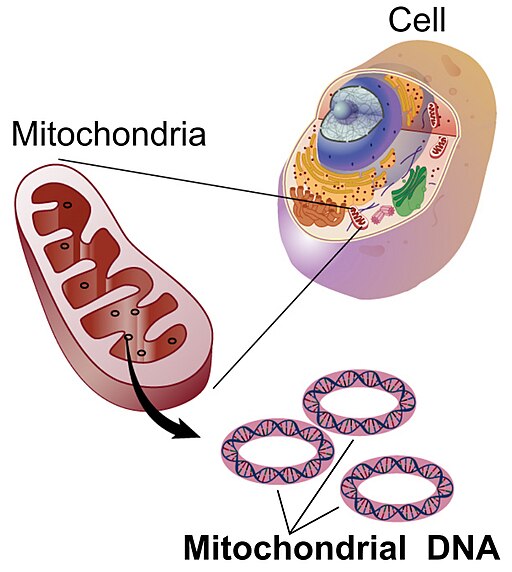 Figure. Magnification of the mitochondria from an animal cell and a depiction of mitocondrial circular DNA. Image Source: National Human Genome Research Institute, Public domain, via Wikimedia Commons
Chloroplast genome: DNA inside chloroplasts (plants/algae)
- Chloroplasts (the organelles that perform photosynthesis) also contain their own DNA
- Like mitochondrial DNA, it is typically circular
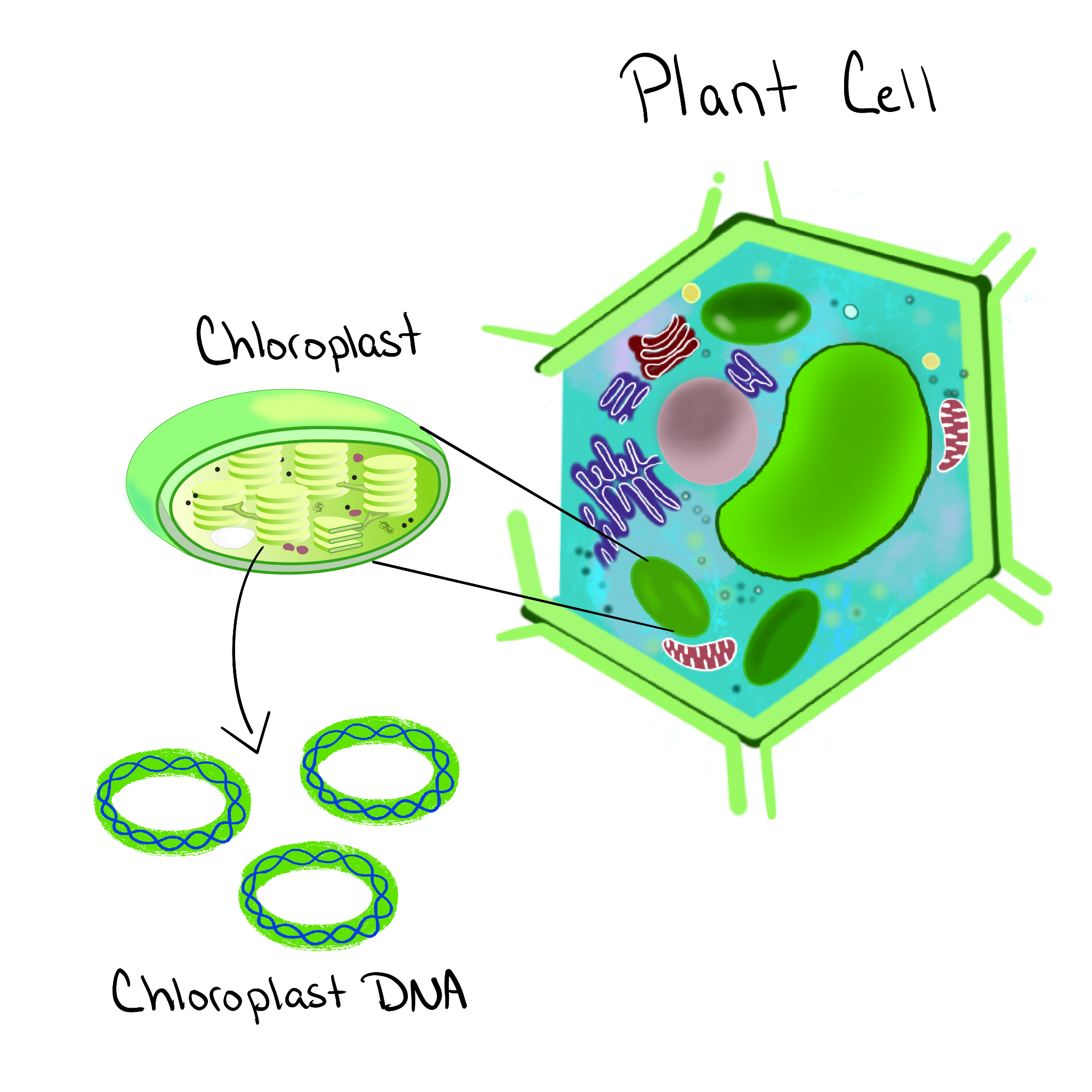 Figure. A plant cell, a chloroplast, and circular chloroplast DNA.
Prokaryote: no nucleus, DNA is in an area called the nucleoid
A prokaryotic cell doesn’t have membrane-bound organelles. It has:
- No nucleus, mitochondria, or chloroplast
- DNA is concentrated in a nucleoid region (no membrane, just an area)
- Often small extra DNA circles called plasmids
Figure. Eukaryotic cell on the left, Prokaryotic cell with nucleoid DNA on the right. Image Source: Science Primer (National Center for Biotechnology Information). Vectorized by Mortadelo2005., Public domain, via Wikimedia Commons